
Top 6 Property Deal Analysis Tools for Foreclosure Investors
Foreclosure research does not end when you find a property. The next step is checking comps, ARV, repair costs, holding costs, rent potential, resale value, and possible exit strategy. This article focuses on deal review instead of simple property discovery. The selected tools cover different parts of the numbers check before an investor spends more time on a deal. The goal is to understand whether the property still makes sense after the first screen.
The right tool depends on what needs the closest review: property context, market behavior, financial modeling, rehab planning, valuation data, or funding preparation. Some platforms help users understand the property background before the math starts. Others turn assumptions into cash flow models, return estimates, repair budgets, or value checks. A few sit closer to execution by connecting analysis with renovation planning or financing. The list below covers each stage so investors can match the tool to the way they review a foreclosure deal.
1. ForeclosureHub
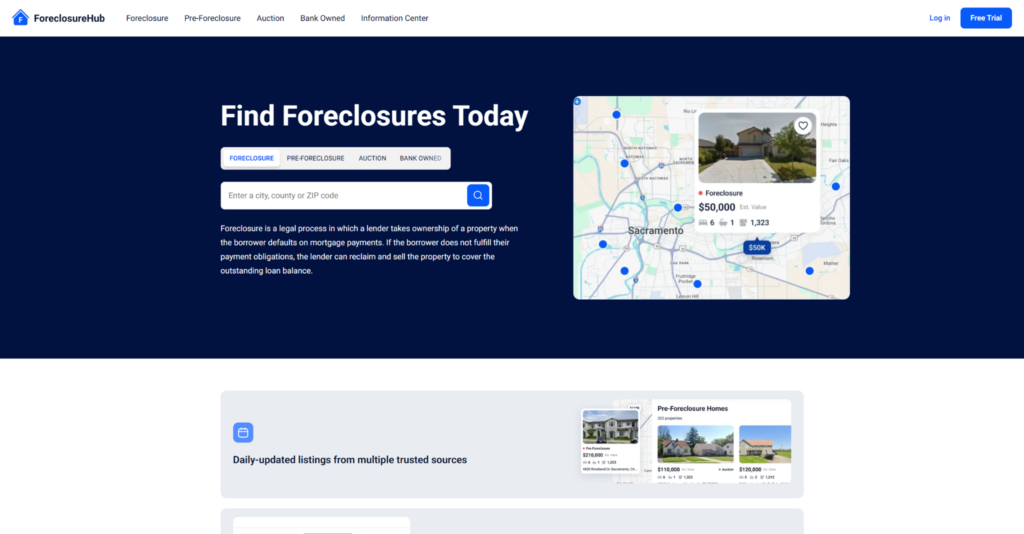
ForeclosureHub takes the first position because deal analysis starts with the right property context. Users can search pre-foreclosure, foreclosure, bank-owned, and auction listings across the United States. The ForeclosureHub property deal research tool gives investors a focused way to review distressed-property data before they compare deal calculators or valuation tools. The platform also provides owner details, mortgage records, tax data, transaction history, market information, and free skip tracing. Some county data may update faster than others, and there is no dedicated mobile app yet.
ForeclosureHub is not a flip calculator or valuation model by itself. Its role is to give users the property background they need before running numbers in other tools. That context can make the next steps more grounded because the user starts with property status, owner data, and market information. It should be used as a research source, not legal or financial advice. The main parts to review include:
- Pre-foreclosure, foreclosure, bank-owned, and auction listings;
- Free skip tracing included with every property search;
- Owner, mortgage, tax, assessment, and transaction details;
- Market data for sale, rental, and comparable property checks;
- Saved searches and email alerts for matching properties.
ForeclosureHub works best as the first research layer before users check ARV, rehab cost, rental math, or financing options.
Best starting point
ForeclosureHub makes sense for investors who need foreclosure-specific context before any deal math. It helps reduce blind screening by connecting property status with owner and market information. The platform should still be paired with calculators, comps, and local due diligence before any decision.
2. Privy
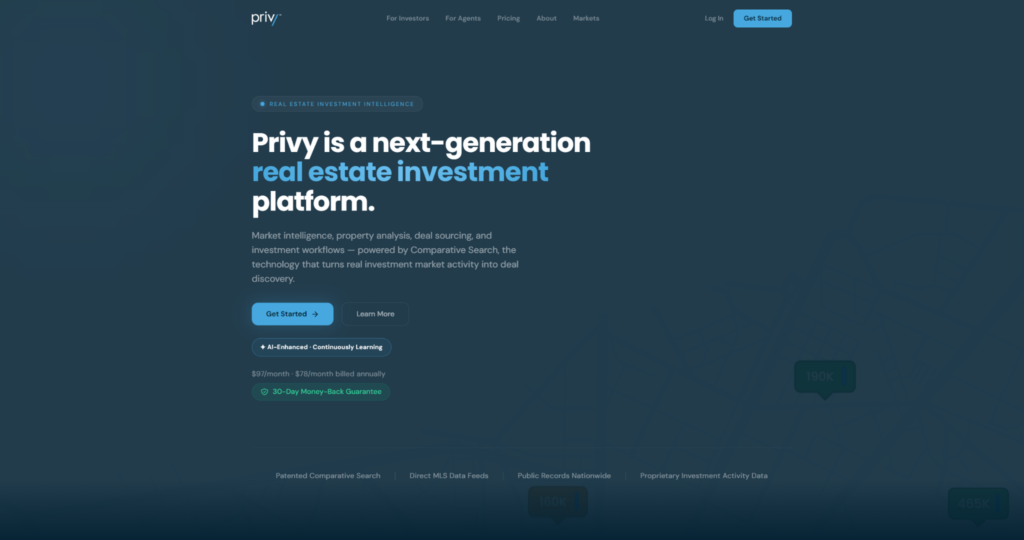
Privy gives this list a market intelligence and comparable-sales angle. Foreclosure investors often need to know whether a property matches real investor activity in the area. Privy can help users review comps, market movement, deal patterns, and possible opportunities before making deeper calculations. This matters because a foreclosure lead can look attractive in isolation but weaker once local behavior is checked. Privy is strongest when the user needs market context around a possible deal.
Privy is better for understanding market movement than for estimating repairs. It can support analysis, but users still need to verify property condition, numbers, and local pricing. The platform works best when it is used before final offer math or rehab planning. It gives the investor a wider view of what is actually moving in the market. Key areas include:
- Market intelligence for real estate investors;
- Property analysis and deal sourcing tools;
- Comparable sales and investor activity context;
- Support for spotting local deal patterns;
- Better for market research than for repair estimating.
Privy can help investors decide whether a foreclosure lead fits the local deal environment before they move into detailed math.
Market context
Privy is strongest when an investor wants to compare a property against real market activity. It helps avoid judging a foreclosure lead without local sales context. The best use is before the investor commits to offer numbers, repair planning, or deeper negotiation.
3. DealCheck
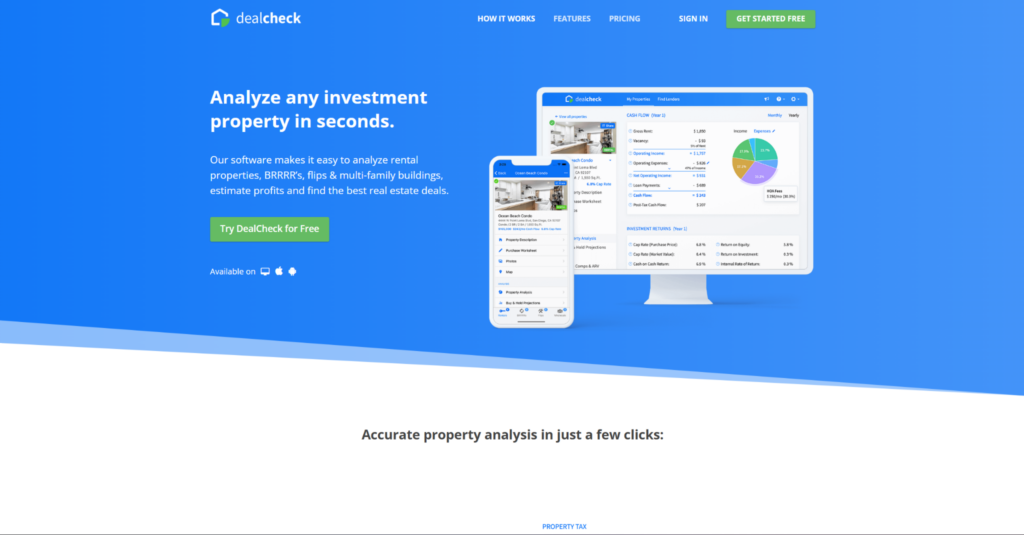
DealCheck brings the article into the actual numbers stage. Users can analyze rentals, BRRRR deals, flips, and multifamily buildings. The platform is useful after the investor already has a property and wants to test purchase price, expenses, loan terms, repairs, cash flow, resale value, or return targets. It turns loose assumptions into a clearer financial model. DealCheck is a strong option when several investment strategies need to be compared for the same property.
DealCheck is about testing whether the deal still holds up after expenses are added. Bad inputs can still create misleading outputs, so repair, rent, resale, and financing assumptions need to be realistic. The tool gives structure to the analysis, but it does not replace local checks. It is especially helpful when the user needs to compare more than one scenario. Core uses include:
- Rental property analysis;
- BRRRR and flip calculations;
- Multifamily deal review;
- Cash flow, profit, and return estimates;
- Reports for comparing different deal scenarios.
DealCheck helps users see whether a foreclosure property still makes sense after financing, expenses, and exit assumptions are included.
Numbers review
DealCheck works well for users who already have a property in mind and need to test the math. It is helpful when the same asset could be reviewed as a rental, flip, BRRRR deal, or multifamily purchase. The final result depends on the quality of the assumptions entered.
4. FlipperForce
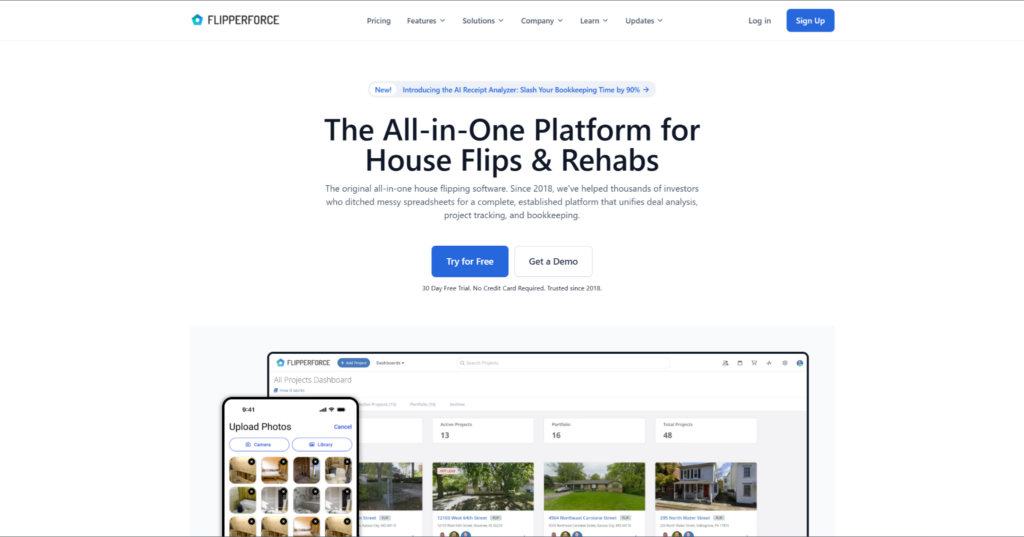
FlipperForce adds a rehab and project planning angle to the list. Foreclosure investors often face properties with repair needs, unclear scope, and budget risk. The platform helps users estimate rehab costs, organize project tasks, track expenses, and plan the flip after the first deal review. This makes it different from tools that only focus on comps or purchase price. FlipperForce matters most when renovation risk could decide whether the property is worth pursuing.
FlipperForce is not only about the buy number. It helps users think through repair scope, timelines, and project costs after a possible foreclosure deal passes the first screen. That can be important when the margin depends on controlling the rehab budget. Repair-heavy properties need more than a quick ARV check. Useful areas include:
- House flip deal analysis;
- Rehab cost estimating;
- Project scheduling and task tracking;
- Expense tracking during the renovation;
- Support for repair-heavy foreclosure deals.
FlipperForce can help users keep the rehab side of the deal visible before renovation costs damage the margin.
Rehab planning
FlipperForce is a good match for investors reviewing a foreclosure property as a renovation project. It is especially relevant when repair costs and timelines could change the deal. Contractor input and local pricing should still be part of the review.
5. HouseCanary

HouseCanary brings a valuation and market analytics layer to the article. Foreclosure investors often need another view of property value, comparable sales, market direction, and resale risk. The platform can help users review valuations, CMAs, forecasts, and broader market data before relying on one estimate. Automated valuation data still needs local judgment, especially when the property has condition issues. HouseCanary is useful when the investor wants more support around value and market movement.
HouseCanary can support valuation review, but it should not replace local comps, inspection, or agent input. Valuation tools work better when they are treated as one part of the research stack. They can show useful signals, but they do not see every repair issue, neighborhood detail, or title problem. Investors should compare the data with property-level review before building an offer. Main areas include:
- Property data and valuation support;
- Comparable market analysis tools;
- Market forecasts and local analytics;
- Context for resale and price checks;
- Better for valuation review than rehab planning.
HouseCanary can help investors sanity-check price assumptions before they build an offer around a foreclosure property.
Value check
HouseCanary fits users who need extra confidence around value, comps, and market direction. It is helpful when a foreclosure property has uncertain resale potential. The data should be used alongside local records, inspection details, and property-level review.
6. Backflip

Backflip rounds out the list by connecting deal analysis with funding support. Fix-and-flip investors may need to assess comps, rehab details, projected profit, ROI, and loan options before moving forward. Backflip can help users review a possible flip and understand financing routes in the same environment. That makes it closer to execution than pure research platforms. It is most relevant when the deal review is tied to a renovation and funding plan.
Backflip helps users think through whether a foreclosure property can become a funded fix-and-flip project. It can connect analysis, projected returns, rehab details, and financing preparation. The platform should not make users skip independent checks on cost, condition, or resale assumptions. Funding still depends on the deal, borrower profile, and loan terms. Main areas include:
- Fix-and-flip deal analysis;
- Comps and projected profit review;
- Rehab detail and ROI checks;
- Funding support for investment properties;
- Support for investors moving from analysis toward execution.
Backflip can help users connect deal review with funding preparation, but each property still needs independent checks.
Execution stage
Backflip is a good fit for users looking at foreclosure properties as potential renovation projects. It is most useful when analysis and financing need to be considered together. Costs, loan terms, repair scope, and exit assumptions should still be confirmed before moving forward.
Final Thoughts
A foreclosure lead only becomes useful after the numbers survive closer review. ForeclosureHub gives users the property context before they move into comps, ARV, rehab estimates, rental math, valuations, or funding checks. Privy and HouseCanary help with market and value context, while DealCheck and FlipperForce support the financial and rehab side of the review. Backflip connects analysis with funding preparation for fix-and-flip investors. A stronger decision comes from checking the property from several angles before treating it as a real opportunity.