Top 6 Companies Building and Integrating AI for Real Business Use
AI now powers many business processes, yet most projects never reach production. The gap between a working model and real integration kills value fast. Companies struggle with infrastructure, data pipelines, and system compatibility. This creates demand for partners who actually deploy AI into live environments. Below, we look at firms that focus on exactly this.
The six companies we selected share one trait: they deliver. Each has proven experience moving AI beyond labs into production systems. Some offer consulting, others platforms, and some pure engineering talent.
Top 6 AI Development Companies
The market is flooded with AI vendors promising the world. Real players who consistently deliver production-ready work are far fewer. We filtered for expertise in generative AI, system integration, and scaling. Our list includes consulting giants, platform specialists, and hands-on engineering teams.
Each brings a different angle to the table. What unites them is the ability to finish. Here are the companies that consistently deliver AI solutions beyond experimentation:
- Geniusee;
- McKinsey (QuantumBlack);
- BCG X;
- H2O.ai;
- DataRobot;
- Scale AI.
Below, we break down what each does best and where they fit your needs.
1. Geniusee
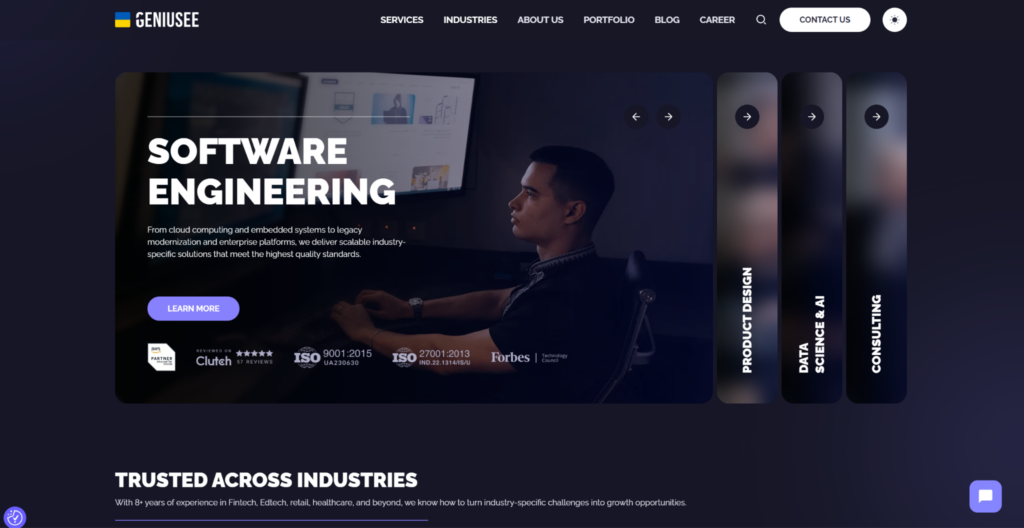
Founded in 2017, Geniusee now employs 300+ specialists across 180+ projects. They work with startups and large enterprises globally. Their main verticals include FinTech, EdTech, healthcare, and retail.
The company focuses on generative AI, NLP, computer vision, and business automation. They hold AWS Advanced Tier and Databricks certifications, plus ISO standards for QA. This is an engineering partner that knows how to plug AI into existing systems. Their core capabilities in AI development include:
- Generative AI consulting and integration;
- Prompt engineering and LLM optimization;
- AI-driven automation for business processes;
- Computer vision and NLP solutions;
- Scaling, MLOps, and cost optimization.
Geniusee covers the full cycle from idea to production deployment. That makes them a solid choice for companies needing both development and integration.
2. McKinsey
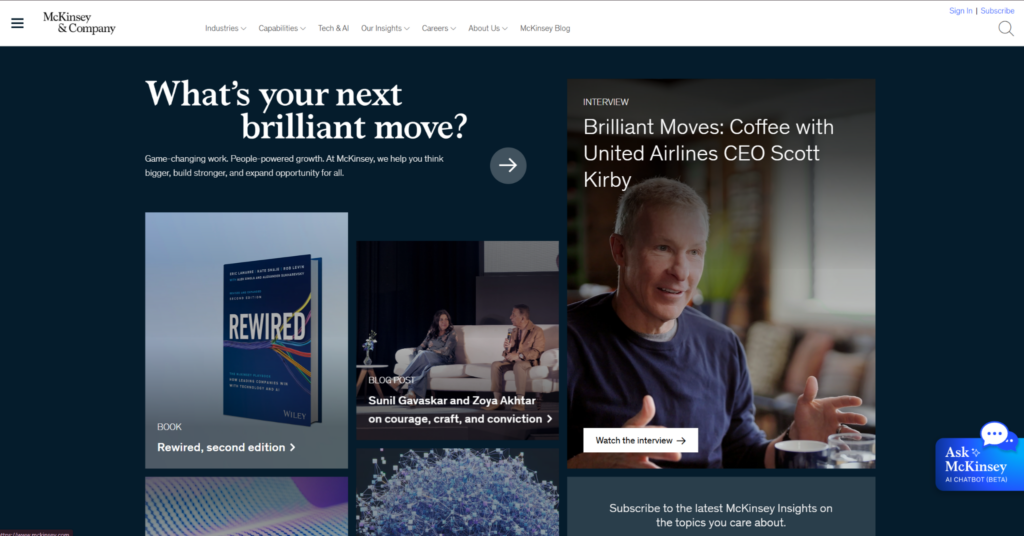
QuantumBlack operates as McKinsey’s dedicated AI arm. They combine high-level strategy with enterprise-grade data work. Most clients are large corporations with complex infrastructures.
Their strength lies in bridging business goals and technical execution. They don’t just build models; they redesign how decisions get made. Their AI capabilities typically include:
- Generative AI strategy and implementation;
- Advanced analytics and data platforms;
- AI-driven decision systems;
- Enterprise AI transformation;
- AI governance and risk management.
Pick McKinsey if you need deep strategic alignment and have the budget for enterprise consulting.
3. BCG X
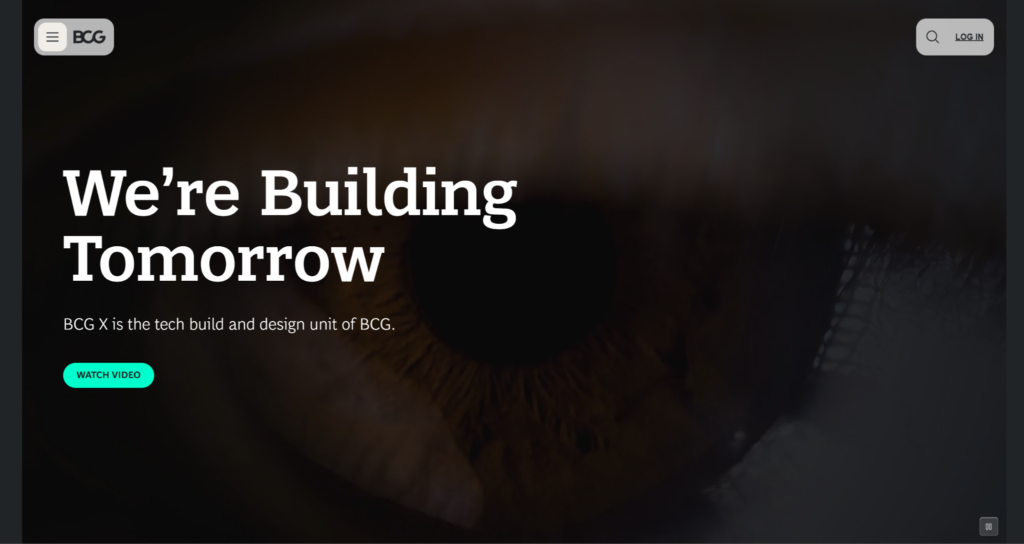
BCG X is the tech build unit inside Boston Consulting Group. They mix consulting discipline with product development speed. The focus stays on creating deployable AI products, not slide decks.
They work across industries but excel at rapid prototyping. Their teams include designers, engineers, and data scientists under one roof. Their AI capabilities include:
- Generative AI product development;
- AI-driven digital transformation;
- Data platform engineering;
- Rapid prototyping and scaling;
- AI integration into workflows.
BCG X offers a rare balance between strategy and actual coding. Good for companies that need both vision and execution.
4. H2O.ai
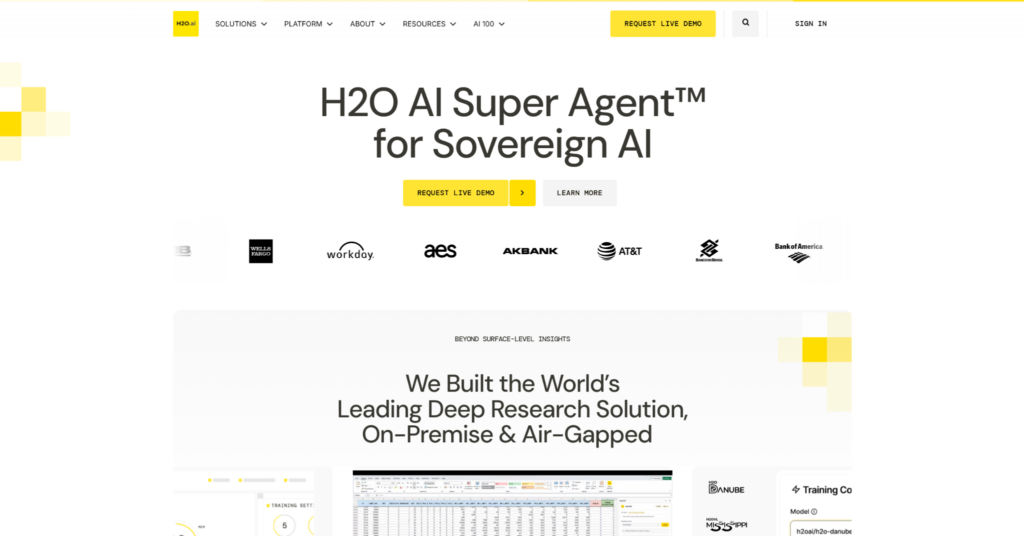
H2O.ai started with open-source machine learning tools. They now provide enterprise platforms for automating AI workflows. Their software focuses on making ML accessible and scalable.
Many data scientists already know their tools. The company adds generative AI features and predictive analytics on top. Key capabilities include:
- Automated machine learning;
- Generative AI tools;
- NLP and predictive analytics;
- AI deployment and monitoring;
- Scalable AI infrastructure.
H2O.ai works well for teams that want a product-led approach to AI adoption.
5. DataRobot
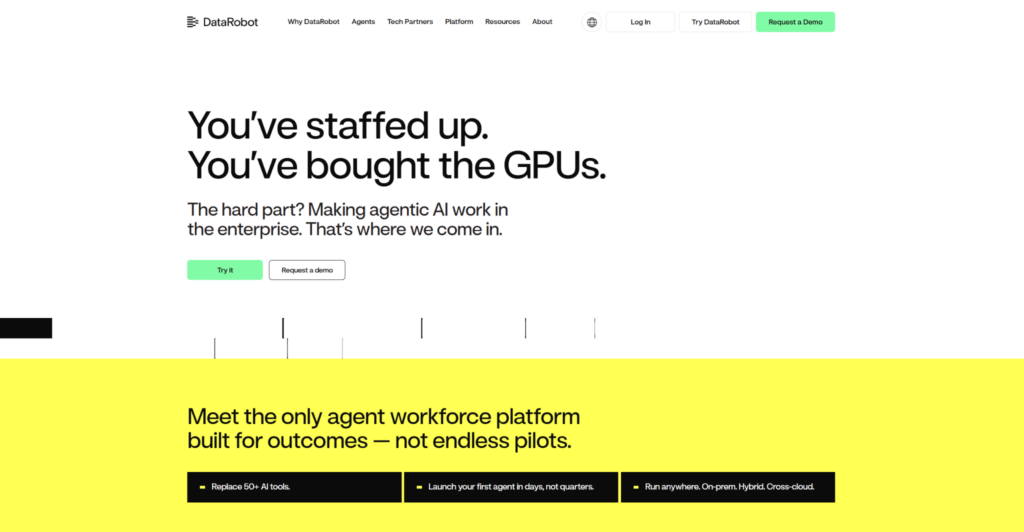
DataRobot offers a full enterprise AI platform. It covers everything from model training to deployment and monitoring. The platform automates many repetitive parts of ML work.
Their tools help organizations move models into production faster. They also integrate with existing business analytics systems. Their AI capabilities include:
- Automated ML and generative AI;
- Model deployment and monitoring;
- AI lifecycle management;
- Business analytics integration;
- Scalable AI operations.
DataRobot suits companies looking for a single platform to manage AI at scale.
6. Scale AI
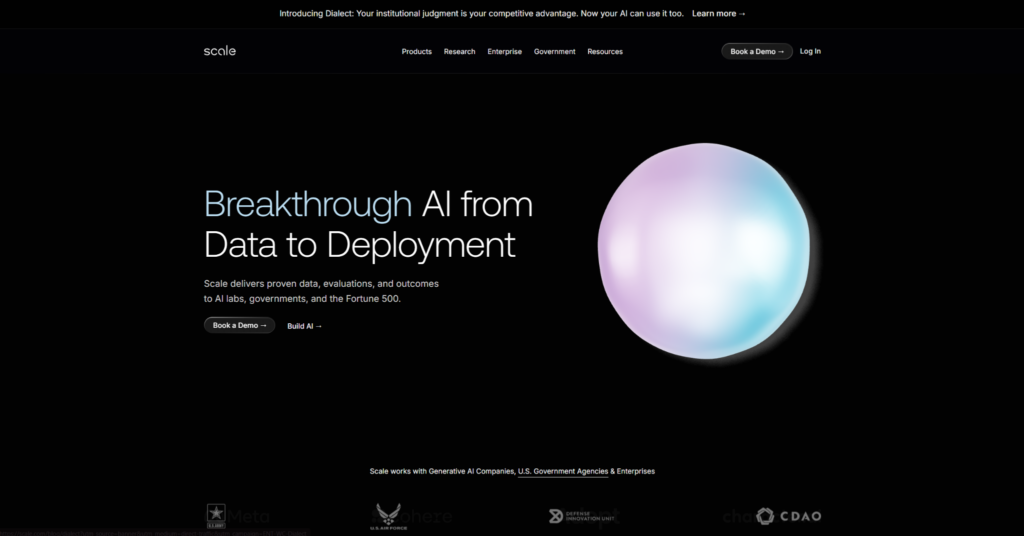
Scale AI builds data infrastructure for machine learning. They started with data labeling and expanded into full training pipelines. Their clients include some of the largest AI teams in the world.
Quality data remains the biggest bottleneck for most AI projects. Scale solves that with tooling and human-in-the-loop workflows. Their core capabilities include:
- Data labeling and annotation;
- AI training pipelines;
- LLM data preparation;
- AI infrastructure support;
- Enterprise AI deployment.
That last one, enterprise deployment, is where most competitors fold. Scale doesn’t. They just keep building tooling until the pipeline works.
How to Choose an AI Development Company
Picking a partner isn’t about who has the shiniest demo. It’s about who still answers your calls when something breaks at 2 AM. Integration difficulty, scaling costs, and actual ROI separate the real players from the pretenders.
Some firms sell strategy but can’t code. Others sell platforms but lock you in. A few, like the ones above, just do the damn work. Focus on what you actually need, not what sounds good on a slide.
When choosing an AI partner, focus on:
- Real-world deployment experience in your industry;
- Integration capabilities with your existing stack;
- Data infrastructure expertise inside their team;
- Scalability track record and cost control methods;
- Industry-specific knowledge beyond generic AI.
Picking the right partner cuts deployment risk and speeds time to value. The wrong one leaves you with a model that never ships.
Final Thoughts
A great model stuck in a Jupyter notebook helps no one, yet that is where most AI projects quietly die after months of wasted effort and burned budget, while the six companies above actually ship stuff instead of just talking about it at conferences.
So pick the one that matches your specific mess rather than the one with the prettiest website, or don’t and keep wondering why nothing works because bad data pipes break faster than bad models ever could, and good plumbing wins every single time.